Litter Storage Conversion
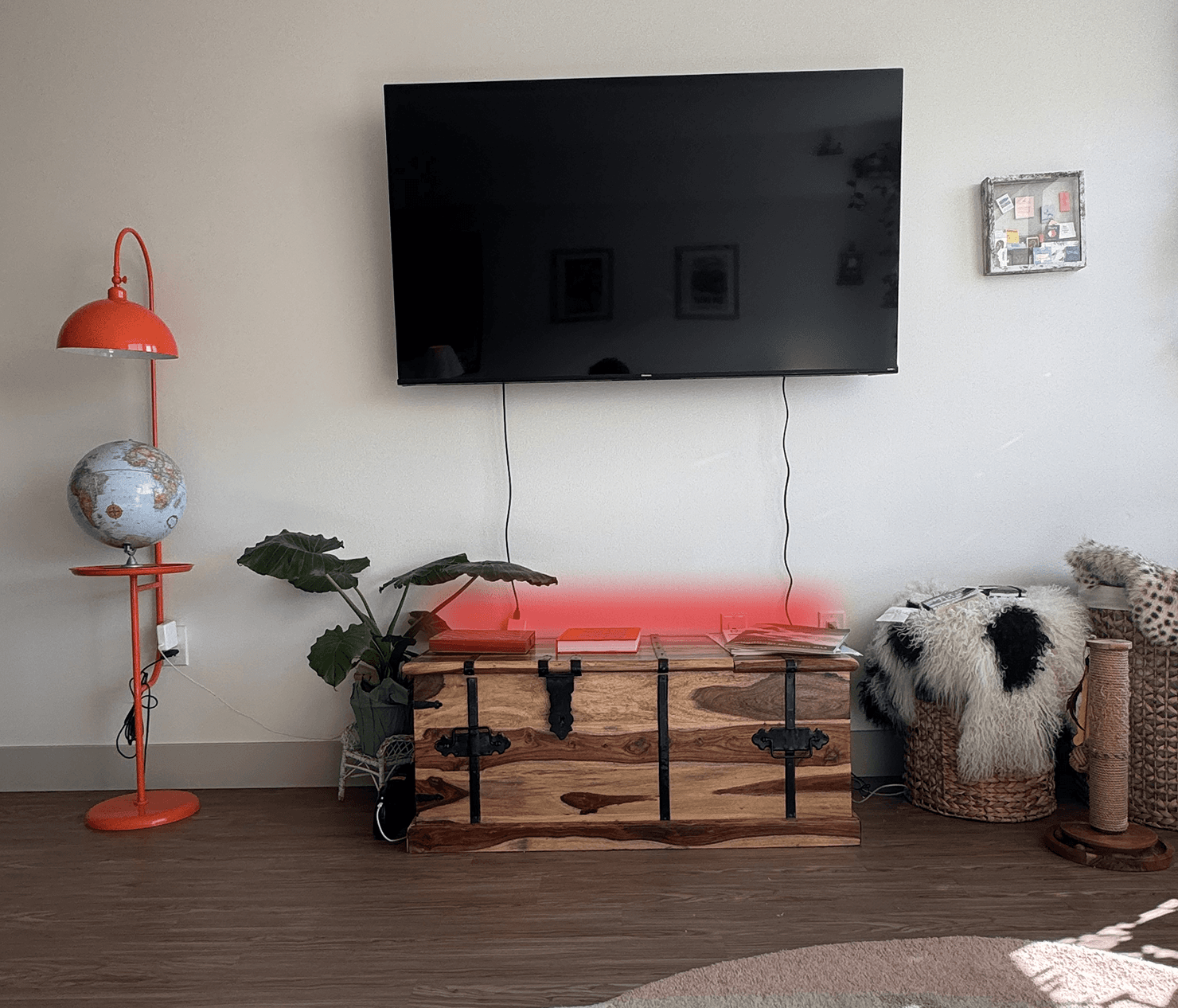
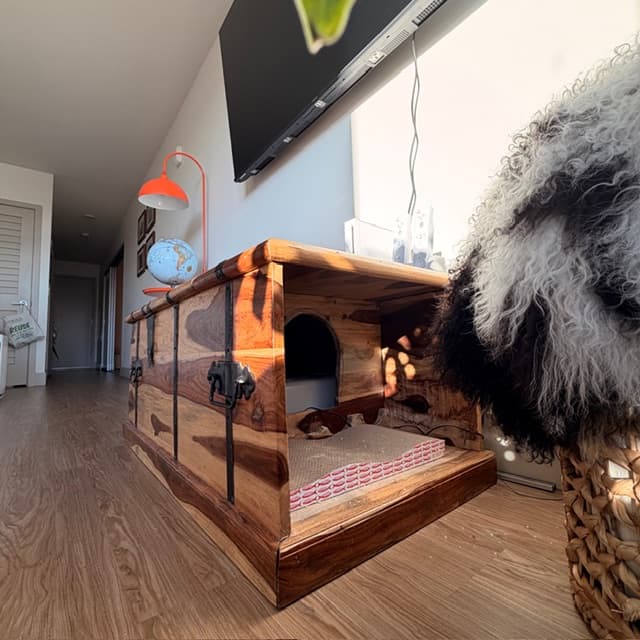
Sharing a small living space with my cats meant their litter box was always visible, disrupting the flow and feel of the room. I designed and converted a wine chest into a litter box cabinet that conceals the box while maintaining easy access for cleaning and comfortable entry for the cats.
Phase 1
Retrofit wine chest
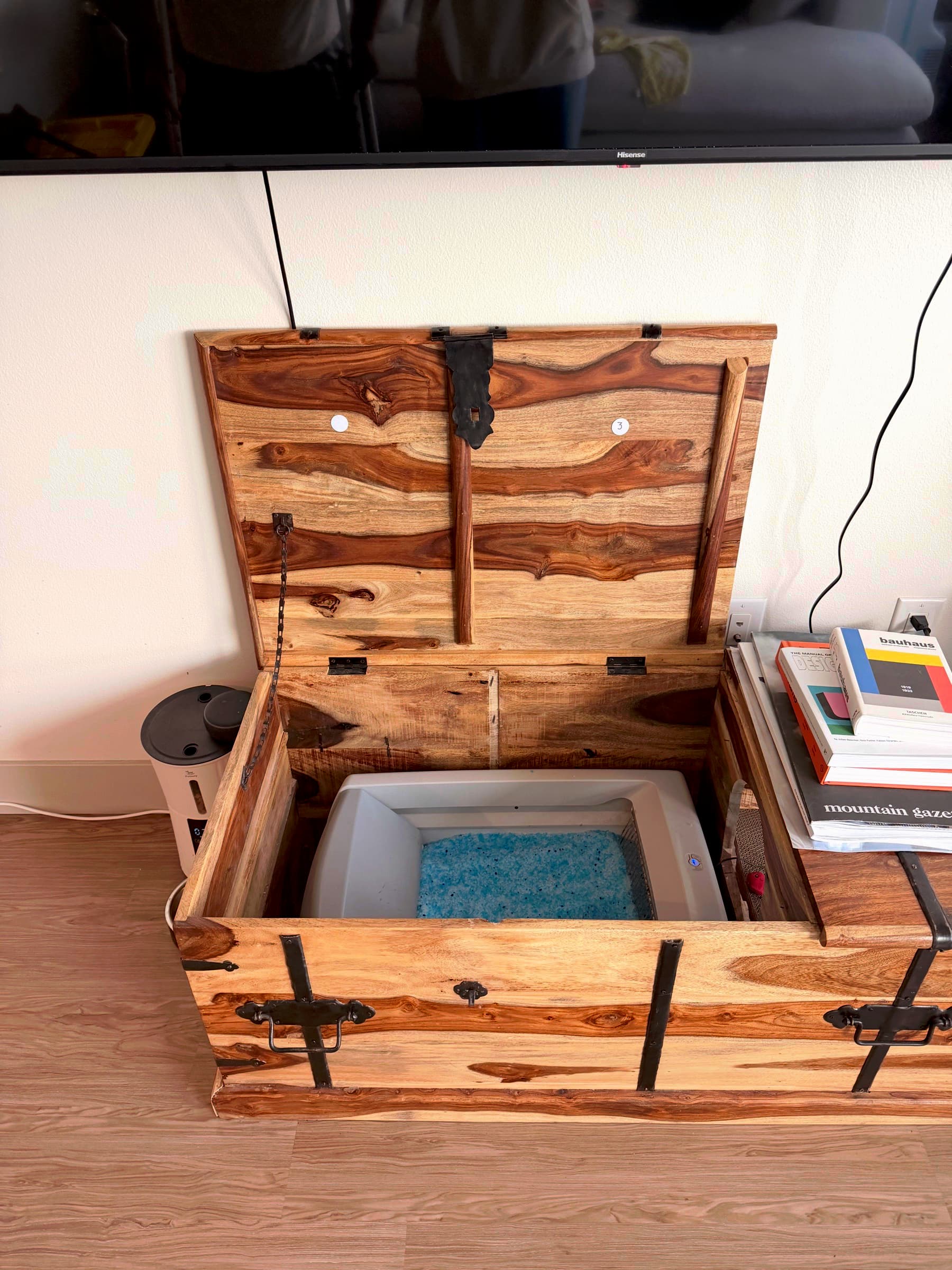
First step was deciding whether to make or buy — after a good scroll through Facebook Marketplace, I found the perfect candidate: a wine chest. A little demolition later and the litter box had a new home inside. All that was left was cutting an entrance for them, and just like that, an eyesore became furniture.
Phase 2
Alerts and Reminders
Hiding the litter box created two new problems: I can no longer glance over to check if it needs changing, and if the auto-cleaner jams and goes unnoticed, things get messy fast.
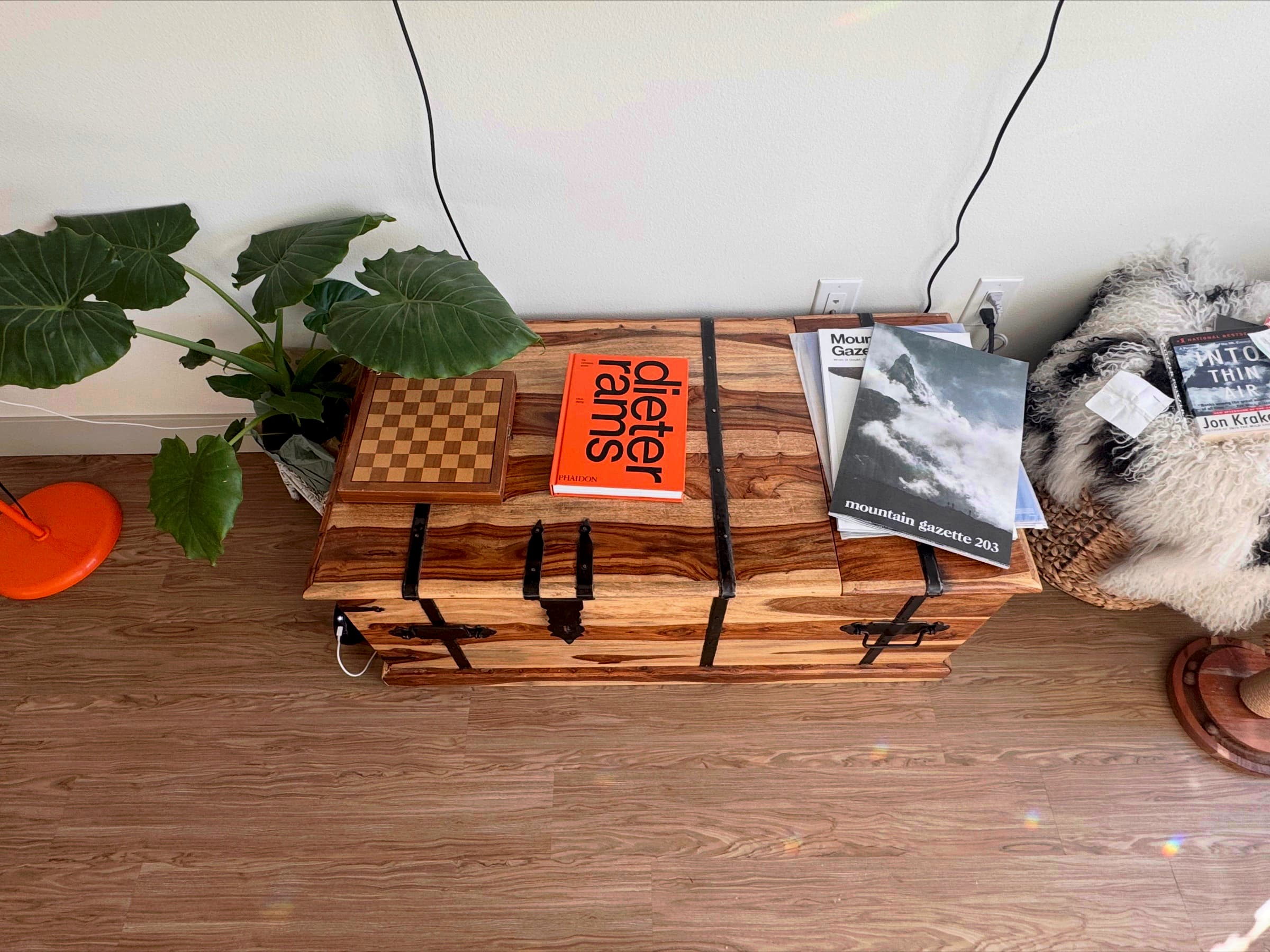
For a low-tech fix, I ordered some NFC chips and set up a couple of iPhone shortcuts — tap the chip and it does two things: logs a calendar event two weeks out to change the litter, and pulls up a quick reorder link when I'm down to my last tray.
It doesn't cover everything though. For jams, I've got a daily phone reminder to do a quick check. Not glamorous, but it works.
Vision
Visual and Seamless
The NFC setup works, but I want to keep refining this into something more seamless. The next iteration has an LED strip that communicates the box's status at a glance — no checking your phone, no guessing.
A steady red glow means it's been two weeks and the litter needs changing. A simple SMS reply of "litter changed" resets the light, starts a fresh countdown, and logs how many trays are left. A flashing red means a jam has been detected — and clears itself once the system registers the fix.
The problem's still evolving, and so is the solution.